
Dynamic Neuromuscular Stabilization
Movement Performance Summit
Hosted by Stanford University Sports Medicine
This course runs from
June 6-7, 2026
We will meet in-person at:
Stanford University Arrillaga Family Sports Center
641 E Campus Dr.
Stanford, CA 94305
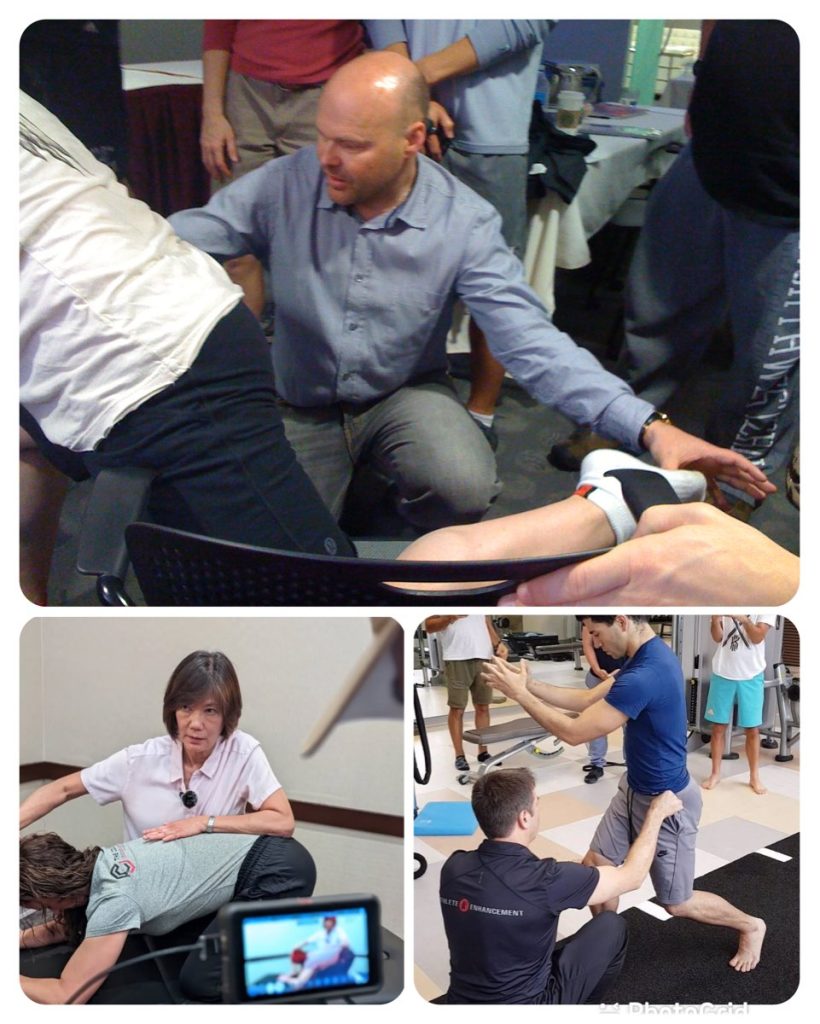
This summit will be a combination of lectures, workshops
and patient demonstrations.

12.0 CEU (BOC Approved Provider #P3210)
Dynamic Neuromuscular Stabilization (DNS) is a rehabilitation approach rooted in developmental kinesiology, focusing on the neurophysiological aspects of motor development during early childhood. This method emphasizes the significance of innate movement patterns observed in infants, which serve as the foundation for optimal posture and functional joint stability in adults.
In the realm of sports, DNS has been integrated to enhance athletic performance and prevent injuries. By training athletes to achieve spinal stability and functional joint centration through exercises in developmental positions, DNS contributes to improved movement efficiency and reduced injury risk.
This is an amazing opportunity to learn from Professor Kolar in the United States as his travel from the Czech Republic has become less frequent. Professor Kolar and the other presenters will be giving a combination of lectures, workshops and patient demonstrations.
- Physical Therapist and Doctors of Chiropractic will have access to CEU information packets which they can use to apply for continuing education credits to their respective boards.
- Saturday night social, and Sunday lunch included with admission fee
Course Time:
Saturday 9am-5pm
Sunday 9am-3pm
Course Fee’s:
Early Bird registration: $795
Available until February 1, 2026
Regular fee is $900
Registration payment includes the Prague School fee, Saturday social hour, and Sunday Lunch.
Learning Objectives:
- Understand the principles of Dynamic Neuromuscular Stabilization (DNS)
- Describe the theoretical foundation of DNS and its roots in developmental kinesiology.
- Explain the role of the central nervous system in postural and movement control
- Discuss how the CNS establishes movement programs during early childhood and how these influence adult motor function.
- Identify key developmental milestones relevant to DNS assessment and intervention
- Recognize typical postural and locomotor patterns in infants and their application in clinical evaluation.
- Apply DNS principles to clinical rehabilitation
- Analyze patient movement and posture using developmental models and implement DNS-based interventions to improve functional stability.
- Demonstrate the application of DNS in sports performance and injury prevention
- Utilize DNS techniques to enhance spinal and joint stability in athletes, improving efficiency and reducing injury risk.
- Describe the developmental and neurophysiological basis of sensorimotor integration
- Understand how sensory inputs guide CNS maturation and motor development during infancy.
- Identify the role of multisensory systems (visual, proprioceptive, vestibular, tactile) in movement control
- Recognize how each sensory modality contributes to postural stability and dynamic coordination.
- Explain the concept of functional joint centration and its sensory-motor implications
- Analyze how proprioceptive input from joint loading supports precise motor control.
- Assess the signs of disrupted sensorimotor integration in clinical populations
- Recognize patterns of altered postural responses and compensatory movement strategies.
- Understand the principles of Dynamic Neuromuscular Stabilization (DNS)
Course Objectives:
- Apply DNS principles to enhance sensory feedback and motor learning
- Utilize exercises in developmental positions to promote optimal sensorimotor coordination.
- Discuss how sensorimotor deficits contribute to common neurological and musculoskeletal disorders
- Connect clinical findings (e.g., dystonia, spasticity, poor coordination) to specific deficits in sensory processing.
- Integrate sensory stimulation techniques (tactile, auditory, vestibular) into rehabilitation or training
- Select appropriate stimuli to facilitate motor activation and improve movement variability.
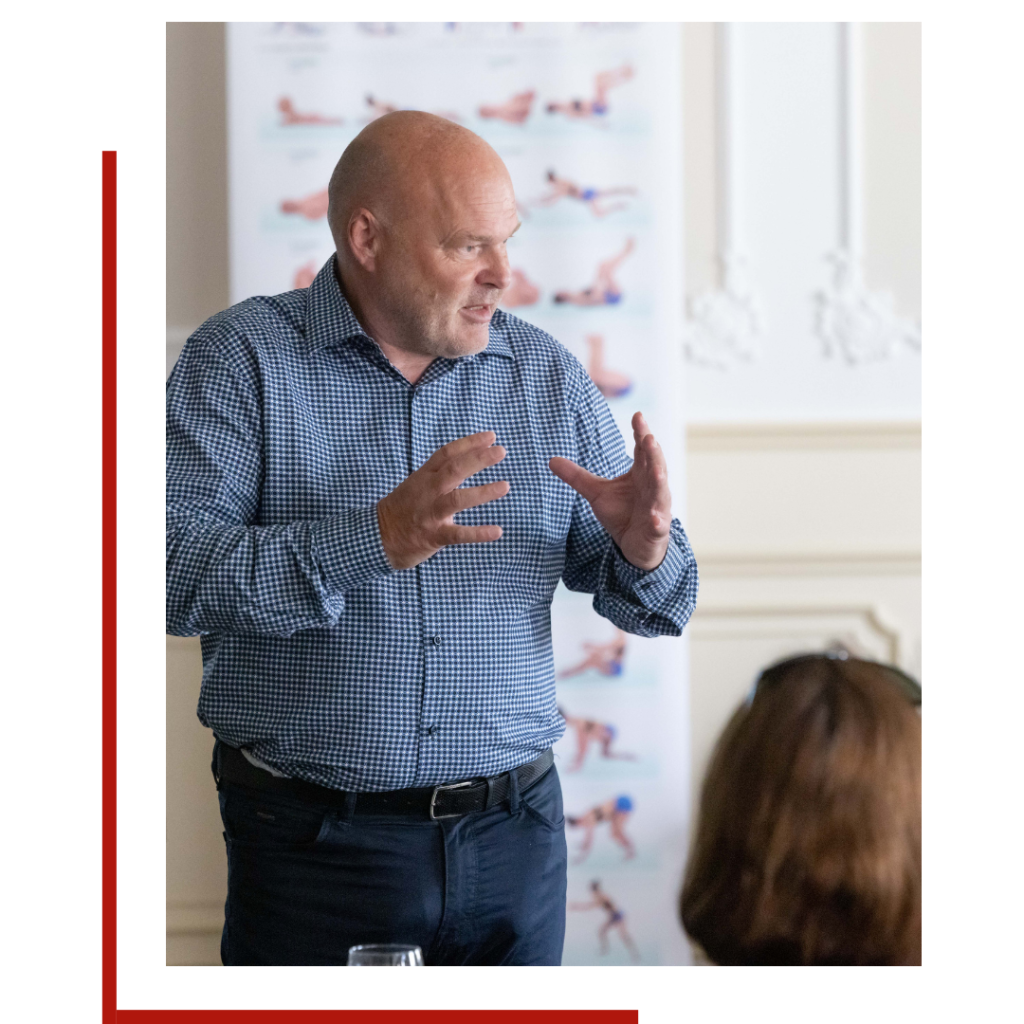
Professor Pavel Kolar, P.T., Paed. Dr., Ph.D.
Professor Kolar is a physiotherapist by training. His instructors, Professor Karel Lewit and the late Professors Vaclav Vojta and Vladimir Janda, profoundly influenced him in his evolution of DNS. He is the Director of the Rehabilitation Department, University Hospital Motol, School of Medicine, Charles University, Prague, Czech Republic. He also acts as an adviser to the Director of the Hospital and serves as vice-dean of bachelor and master study at Second Medical Faculty, Charles University, Prague.
Professor Kolar is renowned for his work in rehabilitation, in addition to his utilization of DNS methods to celebrities in the world of sports, politics and entertainment. He has been appointed team clinician for the Czech Olympic teams, Soccer team, Davis Cup tennis teams and national ice hockey teams. He gained wide recognition for his treatment of former Czech President Vaclav Havel, which included traveling and serving as the President’s personal clinician when he went abroad. Because of the profound influence of DNS to rehabilitation in the Czech Republic, Professor Kolar was awarded the prestigious “Presidential Award for Professional Excellence” by Czech President Vaclav Klaus in 2007. This award is typically reserved for those in their later years after many decades of significant contributions to society, while Professor Kolar’s contribution of DNS earned him the coveted award while still in his early 40’s!!

Professor Alena Kobesova, M.D., Ph.D.
Dr. Kobesova is a neurologist and physiatrist at the Rehabilitation Department, University Hospital Motol, School of Medicine, Charles University, Prague, Czech Republic.
Dr. Kobesova is a certified instructor in Manual Medicine in the Czech Republic. She has studied extensively with Professor Karel Lewit, an international authority in manual medicine for more than 5 decades and the founder of the internationally renowned “Prague School of Manual Medicine & Rehabilitation”. In conjunction with Professor Lewit, she has produced a seven-volume instruction video demonstrating “Prague School” therapeutic soft tissue mobilization and relaxation techniques.
Dr. Kobesova is the Assistant Academic Director of the Rehabilitation Clinic, 2nd School of Medicine, Charles University, Prague. She currently acts as a Vice-Dean for physiotherapy study program and doctoral study programs at the 2nd Medical School. Since 2014 she has been a member of Research Council at the 2nd Medical Faculty, Charles University, Prague, and since 2017 a member of Research Council at Medical Faculty, Masaryk University, Brno, Czech Republic. Dr. Kobesova is an instructor of neurology and also of physical/manual medicine and rehabilitation. She is a chairman of doctoral study program Kinesiology and Rehabilitation at 2nd Medical faculty, Charles University. She also organizes and teaches courses for international groups of clinicians who travel to the Czech Republic to study Dynamic Neuromuscular Stabilization (DNS) and “Prague School” methods. She is the main coordinator of all DNS courses worldwide and website administrator for www.rehabps.com
Specializing in the treatment of patients suffering from various neurological disorders, Dr. Kobesova is a member of interdisciplinary team, which cares for patients suffering from hereditary motor and sensory neuropathy (HMSN – Charcot Marie Tooth). She has published numerous clinical articles in the Czech and international journals regarding HMSN, in addition to papers on other topics related to DNS and rehabilitation.
Dr. Kobesova successfully completed the Czech Reflex Locomotion Training Course, which covers the theoretical and practical methods of the founder of Reflex Locomotion, Professor Vaclav Vojta. Dr. Kobesova has instructed numerous physical/manual medicine and rehabilitation courses on four continents, mainly on DNS according to Kolar. She has been a key-note speaker on more than 40 international and 50 Czech scientific conferences. She served as the main organizer and/or president on four international conferences in DNS.
Dr. Kobesova is a member of editorial board of Czech Journal of Physical Medicine and Rehabilitation, and international journals Physical Activity Review, and Physiotherapy Quarterly. She has published and co-authored 16 book chapters, over 60 scientific papers, 5 educational posters, numerous educational videos and booklets. In 2009-2012 Dr. Kobesova accepted an appointment as Adjunct Senior Lecturer in the Faculty of Health Sciences, Murdoch University, Australia. Since 2018 Dr. Kobesova has a visiting professor appointment with Alma Mater University, Maribor, Slovenia.

Clare Frank, PT, DPT, MS
Dr Frank was born and raised in Malaysia where she found her passion in sports. She started competing at the age of 10 and went on to win several state and national competitions in badminton. Shortly after representing Malaysia in the International Women’s Uber Cup in 1981, she left for the United States to pursue her education as a physical therapist. While at Northern Illinois University, she earned All American honors and the distinguished Broderick Award in Badminton. Her experience in competitive sports and training has set the backdrop for her keen interest in the movement system and its relationship with musculoskeletal pain syndromes.
Dr. Frank received her physical therapy degree from Northern Illinois University. She completed the Kaiser Permanente Orthopedic Residency program in 1993 while working on her Master of Science degree in Physical Therapy & Biokinesiology at University of Southern California. She then went on to receive her post-professional doctorate degree from Western University of Health Sciences, Pomona, California in 2003. She is a board-certified specialist in Orthopedic Physical Therapy (OCS) and a fellow in the American Academy of Orthopedic Manual Physical Therapy (FAAOMPT). Her clinical career has been greatly influenced by Shirley Sahrmann PT, PhD, and the Prague School of Manual Medicine faculty, namely, the late Vladimir Janda MD, DSc, the late Karel Lewit MD and Pavel Kolar PT, PhD.
Dr. Frank practices in Los Angeles, California. She currently serves as clinical instructor for the Spine Rehabilitation Fellowship at Kaiser Permanente, Los Angeles. She served on the medical team for the 2009 World Figure Skating Championships held in Los Angeles, and injury prevention & rehab team for the Chinese Olympic National Training Center in Beijing, China (2010-2016). Dr. Frank is a certified instructor for Janda’s Approach to Musculoskeletal Pain Syndromes, and Kolar’s Approach to Dynamic Neuromuscular Stabilization. She has presented at both state and national conferences. She currently teaches in the U.S. and internationally and has co-authored “Assessment and Treatment of Muscle Imbalances: The Janda Approach”.

Michael Rintala, D.C. is in private practice in San Diego, California specializing in sports medicine and rehabilitation. He holds a Bachelor of Arts degree in Psychology from the University of California at San Diego. He graduated with a Doctor of Chiropractic degree from the Los Angeles College of Chiropractic in 1997.
The Prague School of Rehabilitation has been an important influence on Dr. Rintala’s approach to patient care. He has been studying the principles and techniques of Dynamic Neuromuscular Stabilization with Prof. Pavel Kolar since 2004.
Dr. Rintala has been part of the Professional Golf Association (PGA) Tour Sports Medicine Team since 2004. He is also a treating doctor for the World Surf League (WSL), and part of the USA Surfing Performance Committee. He has been involved with a wide variety of other organizations ranging from Dance to Action Sports.
Dr. Rintala is one of the Prague School of Rehabilitation Primary Instructors teaching Dynamic Neuromuscular Stabilization (DNS) in the United States. He is also a DNS Certified Exercise Trainer (DNSET).
If a course is cancelled for any reason, the organization shall not be held liable for any travel, accommodation. or related expenses incurred by participants. All such costs are the sole responsibility of the participant.
Copyright © 2025 Dr. Michael Rintala, D.C | Powered by Astra WordPress Theme